Are you tired of the same old ornamental plants in your garden? Why not spice things up—literally—by creating an edible landscape? Let’s explore how you can incorporate edible plants, herbs, and fruit trees into your landscape design while keeping any pesky deer at bay.
What is an Edible Landscape?
An edible landscape is a clever gardening concept that blends ornamental plants with edible ones, creating a space that’s visually stunning and provides fresh, homegrown food. It’s a practical and beautiful approach to gardening that allows you to have your cake and eat it too—or in this case, have a gorgeous garden that you can also harvest from! Let’s explore some common types of edible landscapes you might consider for your property:
- Herb Gardens: One of the simplest ways to start an edible garden is by incorporating herbs. Fragrant herbs like basil, rosemary, thyme, and mint can be used as border plants, in containers, or mixed with ornamental flowers.
- Fruit Tree Orchards: Fruit trees can serve as stunning focal points in your landscape while providing delicious harvests. They can be planted as standalone features or grouped to create a mini-orchard.
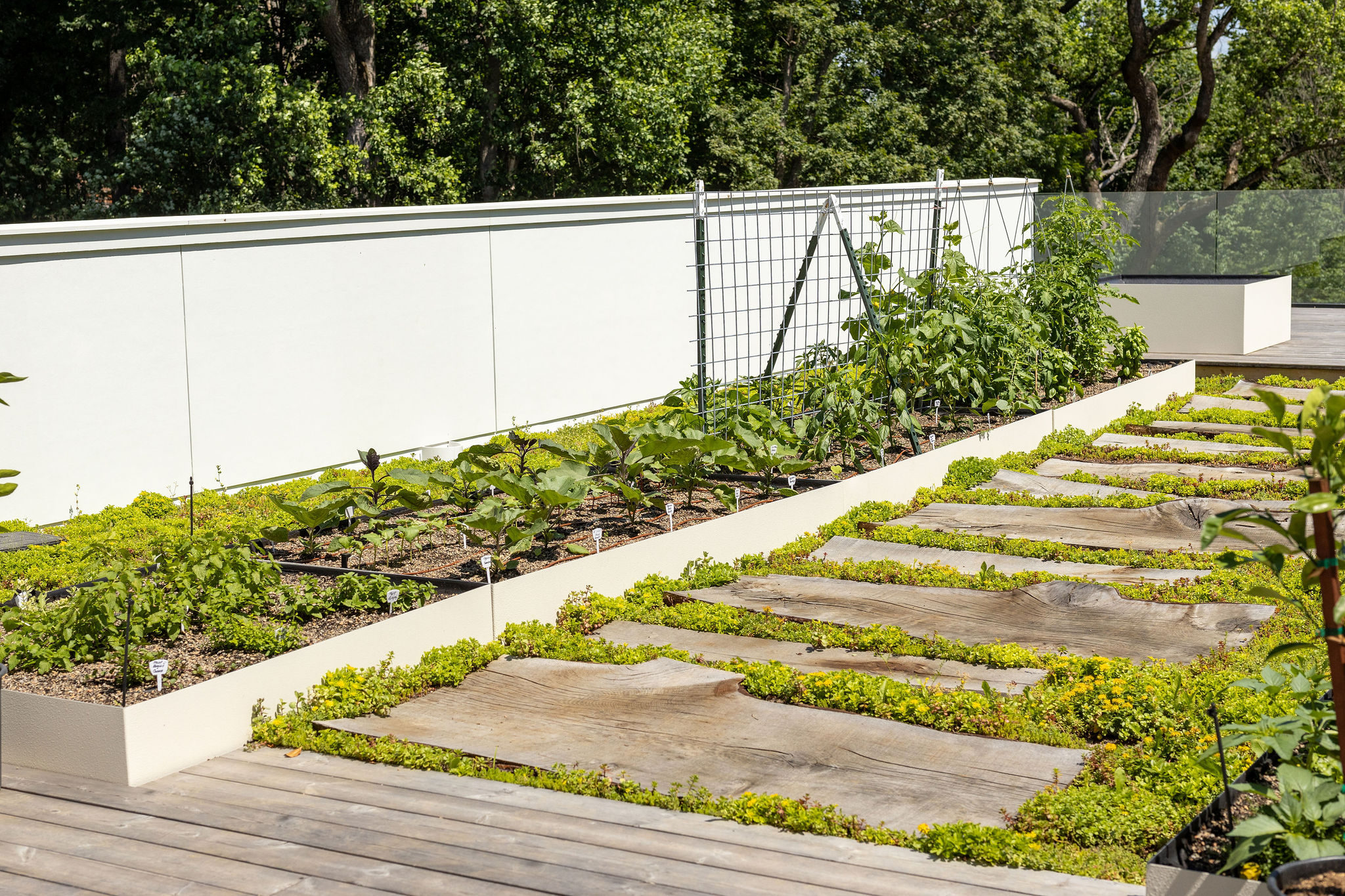
- Kitchen Gardens: These are dedicated spaces for growing vegetables, herbs, and small fruits. They can be designed with raised beds, which look neat, improve soil drainage, and make harvesting easier. Vertical gardens for climbing plants like peas and beans can add visual interest, while colorful lettuce varieties can serve as attractive border plants.
- Edible Flower Gardens: Many flowers are edible as well as beautiful. Nasturtiums, pansies, and marigolds will add splashes of color to your landscape and your plate.
- Berry Patches: Berry bushes like blueberries, raspberries, or blackberries can be used as hedges or border plants while supplying sweet treats throughout the growing season.
- Integrated Landscapes: This approach involves seamlessly blending edible plants throughout your entire landscape. For example, you might use apple trees as shade trees, line your driveway with berry bushes, or use colorful Swiss chard as ornamental border plants.
Benefits of Edible Landscaping
- Fresh, organic produce at your fingertips
- Reduced grocery bills
- Increased biodiversity in your yard
- A unique and beautiful landscape
- Educational opportunities for children
- Sustainable and environmentally friendly
Incorporating Edible Plants into Your Landscape
The Perfect Starting Point
Herbs are a great way to begin your edible landscaping journey. They’re relatively easy to grow, smell fantastic, and add flavor to your meals. Think about planting:
- Basil
- Rosemary
- Thyme
- Oregano
- Mint (in containers to prevent spreading)
These herbs can be used as border plants, in containers, or mixed with ornamental flowers for a beautiful and fragrant display.
The Centerpiece of Your Edible Landscape
Fruit trees can serve as stunning focal points in your yard while providing delicious harvests. Some popular options include apple, peach, pear, and cherry trees. When choosing fruit trees, think about the climate you live in and select varieties that are well-suited to the region. A team of seasoned professionals is always helpful when you’re ready to select the perfect trees for your landscape, ensuring the plants are properly planted and cared for.
Beauty Meets Function
Contrary to popular belief, vegetable gardens can be both productive and attractive. Some ideas include:
- Raised beds with decorative edges
- Vertical gardens for climbing plants like peas and beans
- Colorful lettuce varieties as border plants
- Ornamental kale or rainbow chard for visual interest

Protecting Your Edible Landscape from Deer
One of the biggest challenges in keeping an edible landscape, especially in areas like Virginia, is protecting it from deer. These graceful creatures can quickly destroy your hard work if left unchecked. But don’t worry—we have solutions!
Deer-Resistant Plants
While no plant is entirely deer-proof, some are less appealing to these four-legged visitors. Think about adding deer-resistant plants to your landscape design. Some options include:
- Herbs like lavender, rosemary, and mint
- Strongly scented flowers like marigolds or daffodils
- Plants with fuzzy or prickly leaves
Check out our blog on Deer Resistant landscapes and treatments.
Physical Barriers
Sometimes, the best defense is a good fence. We recommend options like:
- Traditional fencing (at least 8 feet tall for deer)
- Invisible mesh fencing
- Electric fencing (where permitted)
Repellents & Deterrents
There are a range of deer repellent treatments and deterrent options to protect your landscape:
- Organic spray repellents
- Motion-activated sprinklers
- Ultrasonic devices
- Professional deer treatment services
Design Considerations
Creating a beautiful and productive edible landscape requires thoughtful design. Some factors to consider include:
- Sunlight requirements for different plants
- Soil quality and drainage
- Mature plant sizes and spacing
- Color and texture combinations
- Year-round interest with seasonal plantings
Ready to Create Your Edible Landscape?
Imagine stepping out your back door to pick fresh herbs for dinner, picking ripe tomatoes off the vine, or harvesting juicy apples from your very own tree. With an edible landscape, you can turn this dream into reality while still maintaining a stunning outdoor space.
Ready to transform your yard into a delicious haven? Contact Lucas & Clark Grounds Company today, and let’s start planning your beautiful landscape!
FREQUENTLY ASKED QUESTIONS
-
What does an edible landscape include?
An edible landscape blends ornamental plants with edible ones such as herbs, fruit trees, vegetables, edible flowers, and berry patches so your yard looks beautiful and provides fresh food.
-
How can herbs be used in an edible landscape?
Herbs such as basil, rosemary, thyme, oregano, and mint can be planted as border plants, in containers, or mixed with other ornamentals for both fragrance and harvestable flavor.
-
What types of fruit plantings work well in an edible landscape?
Fruit trees like apple, peach, pear, and cherry can serve as focal points or mini-orchards, and berry bushes such as blueberries, raspberries, or blackberries can be used as hedges or border plants that also yield fruit.
-
What are some examples of edible plants that also add visual interest?
Edible flowers like nasturtiums, pansies, and marigolds bring color and can be used in flower gardens, while vegetables like colorful lettuce, ornamental kale, and rainbow chard contribute both beauty and food value.
-
What challenge does Lucas & Clark Grounds Company anticipate with edible landscapes in this region, and how can it be addressed?
One common challenge is protecting edibles from deer. We recommend incorporating deer-resistant plants, physical barriers like fencing, and deterrents to help protect your landscape from wildlife while maintaining productivity and beauty.