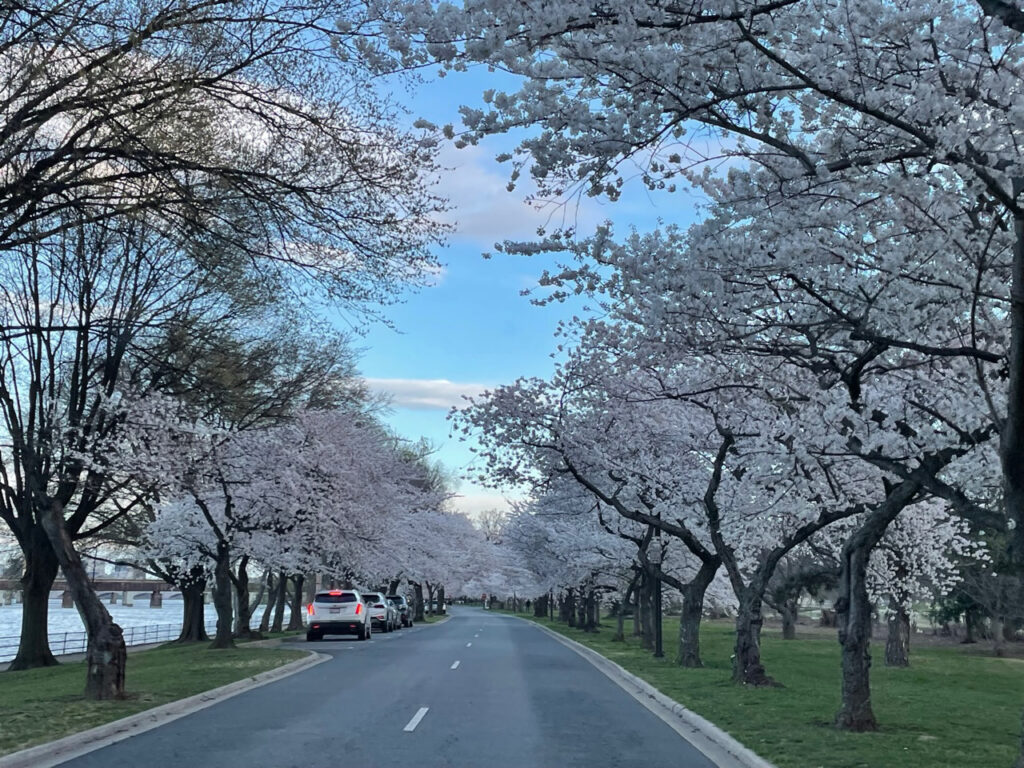
The National Cherry Blossom Festival in Washington D.C. is a yearly celebration of the spring season featuring the gift of cherry trees from Japan to the United States. The festival attracts visitors from around the world to marvel at the beauty of thousands of cherry trees in full bloom. If you’re looking to add a touch of the cherry blossom magic to your own property, Lucas & Clark Grounds Company is here to help.
Cherry trees come in a variety of species, each with its own unique characteristics. Here are some of the most popular cherry tree varieties:
- Yoshino Cherry (Prunus x yedoensis): Among the most popular cherry trees, the Yoshino Cherry is the dominant species in the National Cherry Blossom Festival in Washington D.C. It is prized for its delicate, fragrant flowers and its ability to thrive in a variety of soil types and climates.
- Kwanzan Cherry (Prunus serrulata ‘Kwanzan’): The Kwanzan Cherry is known for its large, double pink flowers that bloom in abundance in early spring. The tree is also prized for its vibrant green foliage and its attractive, spreading form.
- Higan Cherry (Prunus subhirtella ‘Autumnalis’): The Higan Cherry is a deciduous tree that is prized for its ability to produce light pink, semi-double flowers in the fall and winter. It is a great choice for gardeners looking to add color to their landscape during the off-season.
- Okame Cherry (Prunus x incam ‘Okame’): The Okame Cherry is a hybrid species known for its bright pink flowers and its ability to adapt to a wide range of climates and soil types. The tree is also prized for its fast growth rate and its attractive, spreading form.
- Weeping Cherry (Prunus subhirtella pendula): The Weeping Cherry is a beautiful and graceful tree that is prized for its delicate, drooping branches and its abundant pink or white flowers that bloom in the spring.
At Lucas & Clark Grounds Company, our team of expert landscapers have the knowledge and expertise to help you choose the appropriate trees for your property and ensure proper placement, planting and long-term care.
In addition to planting cherry trees, our team also offers a variety of tree care services, including pruning, fertilization, and pest control. We understand the importance of tree maintenance to ensure they continue to grow and bloom year after year. Our team will work closely with you to develop a comprehensive tree care plan that meets your specific needs.
Whether you’re looking to plant cherry trees for the first time or maintain your existing cherry trees, Lucas & Clark Grounds Company is here to help. Our team of experienced landscapers is dedicated to providing top-quality tree care services to help you create and maintain a beautiful, healthy landscape.
So, as the National Cherry Blossom Festival draws near, why not bring a touch of the cherry blossom magic to your property? Contact Lucas & Clark Grounds Company today to learn more about our tree planting and tree care services and how we can help you create a stunning landscape for years to come.
Frequently Asked Questions
Do oscillating sprinklers or rotary heads give better germination coverage on uneven grades?
Oscillating sprinklers typically provide softer, more even coverage for new seed. Rotary heads are fine for established lawns but can be too strong for seedlings on slopes. We often recommend oscillating models for fall overseeding in McLean and Great Falls.
Could grubs or soil insects be the hidden cause of scattered dead spots?
It’s possible. If your turf lifts like a loose carpet or you see skunks or raccoons digging, grubs might be the culprit. You can check by peeling up a small section and looking for white grubs near the roots. If you find more than five per square foot, treatment is usually needed.
Is $800 for top dressing reasonable for 1/3 acre?
That price is in the typical range for quality compost topdressing in Northern Virginia. The final cost depends on access, thickness, and materials. If we pair it with aeration or overseeding, we can often make it more efficient for your budget.
On a sloped yard (erosion issues), does granular vs. liquid make a difference for late-season applications?
Yes, granular products tend to wash downhill more easily. For slopes in places like Arlington and Leesburg, a light liquid application for fertilizer or weed control sticks better and delivers nutrients evenly. We can blend both approaches depending on grade and runoff.