
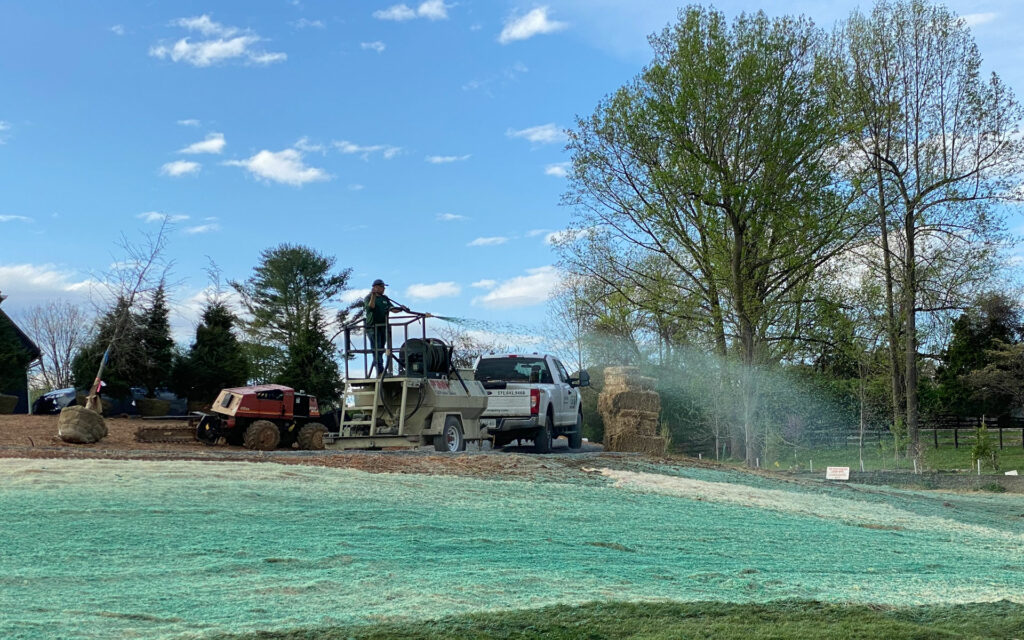
Are you a property owner or builder in the Great Falls area of Northern Virginia looking for an eco-friendly, price efficient and effective way to stabilize your soil and prevent erosion? Hydroseeding might be the solution you need! This process involves spraying a mixture of water, seed, fertilizer, and other additives onto the soil to create a protective layer of vegetation. At Lucas & Clark Grounds Company, we offer high-quality and cost-effective hydroseeding services that meet your needs and exceed your expectations. Here are some tips on how to use hydroseeding for stabilization purposes in the spring and fall.
Spring Hydroseeding for Stabilization
Spring is the perfect season to consider hydroseeding for soil stabilization. The snow melts and the ground thaws, making your soil unstable and susceptible to erosion. Hydroseeding can create a protective layer that helps hold the soil in place and promotes vegetation growth. Some key tips for spring hydroseeding include:
- Choose the correct seed mix: Select a seed mix that suits your soil type and the climate in your area. For sandy soil, choose a seed mix with more grasses and fewer legumes.
- Prepare your soil properly: Remove debris or rocks and till the soil to create a smooth surface. If your soil is compacted, you may need to aerate it first.
- Water your hydroseed regularly: Water your hydroseeded area once or twice a day, depending on the weather and soil type.
Fall Hydroseeding for Stabilization
Fall is another excellent season to consider hydroseeding for soil stabilization. As the leaves fall and the weather cools down, your soil becomes more exposed and vulnerable to erosion. Hydroseeding can stabilize your soil and prepare it for the winter months. Some key tips for fall hydroseeding include:
- Choose the correct seed mix: Select a seed mix that suits the climate and winter conditions in your area. For harsh winters, choose a seed mix with winter-hardy grasses.
- Prepare your soil properly: Remove debris or rocks and till the soil to create a smooth surface.
- Water your hydroseed regularly: Water your hydroseeded area once or twice a day, depending on the weather and soil type.
At Lucas & Clark Grounds Company, we’re committed to providing eco-friendly and cost-effective hydroseeding services for soil stabilization. Whether you’re looking to stabilize your soil in the spring or fall, we can help. Contact us today to learn more about our hydroseeding services and how we can help you achieve a healthy and vibrant landscape.
Frequently Asked Questions
How can I tell drought dormancy from heat kill on tall fescue in July?
Drought dormancy turns grass straw-colored but leaves crowns alive , tug gently, and it won’t pull up. Dead turf from heat stress breaks off easily at the base. Dormant lawns usually green up after consistent rain.
For NoVA 7a/7b, what’s the typical calendar for split pre‑emergent, overseed, and fall nitrogen apps?
In Northern Virginia’s 7a/7b zones:
• March–April: Apply pre-emergent before soil hits 55°F.
• Late August–September: Aerate and overseed.
• October–November: Apply a balanced fertilizer for root growth.
That rhythm keeps your turf dense and resilient year-round.
What’s a realistic first‑year plan if my lawn is 70% crabgrass by August?
Don’t panic! We’ve seen plenty of lawns bounce back from that. In fall, mow short, core-aerate, overseed heavily with tall fescue, and top-dress with compost. Skip pre-emergent until the new seed establishes, then resume your normal schedule next spring. Within a year, you’ll be surprised how much thicker and greener it looks.
Should I avoid dethatching tall fescue if thatch looks minimal?
Yes, tall fescue rarely builds up thatch. If you see less than half an inch, skip the dethatching and go for core aeration instead. It’s gentler on the turf and helps air and nutrients reach the roots.
Can wildlife (foxes, rabbits, etc.) create patchy burn spots similar to dogs?
Yes, though it’s less common. Fox or rabbit urine can spot-burn grass, especially in dry heat. Most small patches recover with regular watering and light topdressing.